 A Gupta Mortgage
Investment Property Mortgage Brampton 2026: Rates, DSCR & Financing
Unlock Brampton's investment potential in 2026. Learn about optimal mortgage rates, DSCR, financing options, and how A Gupta Mortgage secures your success. Contact us for a tailored strategy today!
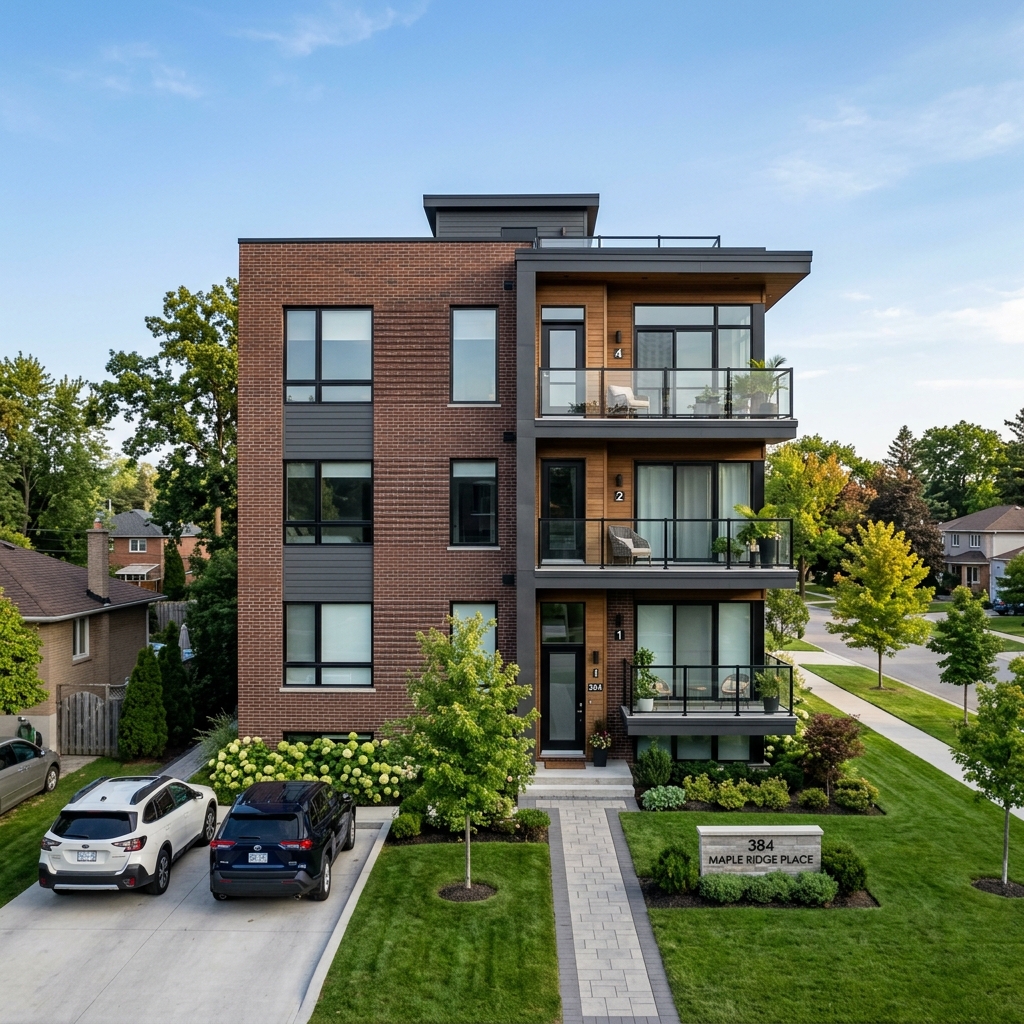
TL;DR: Investing in Brampton real estate for 2026 requires a strategic approach to financing, navigating evolving mortgage rates, and understanding crucial metrics like the Debt Service Coverage Ratio (DSCR). While interest rates are projected to stabilize or slightly decrease, securing competitive investment property mortgage rates – which are typically 0.25% to 0.50% higher than primary residence rates – demands expert guidance to ensure your property generates a strong DSCR, often requiring 1.20x for prime lenders.
Investment Property Mortgage in Brampton for 2026: Rates, DSCR, & Financing Strategies
As a Level 2 Mortgage Agent serving the vibrant communities of Brampton, Kitchener-Waterloo, and Mississauga, I've witnessed firsthand the incredible potential and unique challenges of the Ontario real estate market. For ambitious investors eyeing Brampton in 2026, understanding the nuances of an investment property mortgage Brampton 2026 is not just an advantage—it's a necessity. This isn't about generic advice; it's about a precision-guided strategy to optimize your financing, maximize your returns, and build lasting wealth.
While online aggregators like Ratehub or WOWA offer broad strokes on mortgage rates Canada, they often miss the intricate, localized details that can save you tens of thousands of dollars and unlock opportunities in a competitive market like Brampton. Let's delve deep into what 2026 holds for investment property financing.
Understanding the Brampton Investment Landscape: 2026 Outlook
Brampton continues to be a magnet for growth, driven by its diverse economy, robust population expansion, and strategic location within the Greater Toronto Area (GTA). For 2026, we anticipate continued strong rental demand, particularly for family-friendly units and townhomes, supported by new immigration targets and a persistent housing supply shortage. CMHC’s latest rental market report for the Peel Region indicated a vacancy rate often hovering below 1.5% for purpose-built rentals, driving average rent increases of 5-8% annually in recent years. This creates a compelling environment for rental income generation, but also necessitates shrewd property acquisition and financing.
💡 Expert Tip: Don't just look at average Brampton home prices. Analyze specific neighbourhood rental demand and property types. A 3-bedroom townhouse near a transit hub in Bramalea or Fletcher's Meadow often yields a stronger return and lower vacancy risk than a detached home on the city's outskirts, significantly impacting your DSCR.
Investment Property Mortgage Rates in Brampton: What to Expect in 2026
The Bank of Canada's monetary policy dictates the trajectory of mortgage rates Canada. While 2024-2025 may see some rate easing, 2026 is projected to offer a more stable, potentially slightly lower interest rate environment compared to peak 2023 levels. However, it's crucial to understand that investment property mortgage rates inherently differ from primary residence rates.
- Premium for Risk: Lenders typically view investment properties as carrying a higher risk profile. Expect investment property rates to be 0.25% to 0.50% higher than comparable rates for an owner-occupied home.
- Fixed vs. Variable: In a stabilizing rate environment, a fixed rate mortgage offers predictability, which can be invaluable for cash flow projections for an investment property. A variable rate mortgage might offer a lower initial rate but introduces uncertainty. Your personal risk tolerance and the property's cash flow resilience should guide this choice.
- Lender Tiers: Prime lenders (A lenders) offer the most competitive rates but have stringent qualification criteria. B lenders and private lenders cater to different risk profiles, often with slightly higher rates but more flexible terms.
Unlike generic platforms, I work with a vast network of over 50 lenders, including prime, alternative, and private institutions, to find the absolute best rate and terms for your specific investment strategy in Brampton. This personalized approach often uncovers rates that are simply not advertised or accessible through standard online searches.
The Critical Role of DSCR (Debt Service Coverage Ratio)
For investment properties, the Debt Service Coverage Ratio (DSCR) is paramount. It’s a measure of a property's ability to cover its mortgage payments and operating expenses from its rental income. Lenders use DSCR to assess the risk of a mortgage loan. The formula is simple: Net Operating Income / Total Debt Service (Mortgage Principal + Interest + Property Taxes + Insurance).
A high DSCR indicates a property can comfortably cover its debts, making it attractive to lenders. A low DSCR signals higher risk.
DSCR Benchmarks You Need to Know:
- Prime Lenders (A Lenders): Most require a minimum DSCR of 1.20x. This means the property's net operating income must be 20% higher than its debt obligations. Some may go as low as 1.15x for exceptional credit and strong borrower profiles.
- B Lenders / Alternative Lenders: These lenders often have more flexible DSCR requirements, sometimes accepting 1.00x to 1.10x. This can be crucial for properties with slightly tighter margins or for investors with unique income situations.
- Private Lenders: DSCR can be less of a primary driver, with emphasis placed more on equity, location, and exit strategy. However, their rates are typically higher.
Understanding and optimizing your DSCR is where a Level 2 Mortgage Agent provides immense value. We help you accurately calculate potential rental income (often using 50%-80% of projected rents for qualification, depending on the lender) and factor in realistic expenses to present a strong case to lenders. This goes beyond the basic calculations you might find on NerdWallet Canada or LowestRates.
Comparison Table: Lender Types and DSCR Requirements for Investment Properties
| Lender Type | DSCR Requirement (Typical) | Qualifying Rental Income (%) | Interest Rate Competitiveness | Flexibility/Criteria |
|---|---|---|---|---|
| Prime Lenders (A) | 1.20x (often strict) | 50% of market rent | Highest (lowest rates) | Strict credit, low debt-to-income ratio, stable employment. |
| B Lenders (Alternative) | 1.00x - 1.15x (more flexible) | 50-80% of market rent | Moderate (higher than A, lower than private) | Broader income verification, some credit flexibility, higher loan-to-value accepted. |
| Private Lenders | Less critical (equity-focused) | Varies (often higher) | Lowest (highest rates) | Equity-driven, short-term solutions, unique property types, less focus on stress test mortgage Canada. |
Navigating Investment Property Financing in 2026
Down Payment Requirements
Unlike primary residences, investment properties typically require a minimum down payment of 20%. For multi-unit properties (2-4 units), some lenders may require 25% to 35%, especially if you're seeking a stronger DSCR or if the property includes commercial components. This higher down payment mitigates lender risk and means CMHC insurance is generally not available for investment properties (though some exceptions exist for 2-4 unit owner-occupied properties).
The Stress Test Implications
Yes, the infamous stress test mortgage Canada still applies to investment properties, even with a 20%+ down payment. Regulated by FSRA (Financial Services Regulatory Authority of Ontario) guidelines, lenders must qualify you at the greater of 5.25% or your contract rate plus 2%. This means your personal finances, including your existing debt-to-income ratio, will be scrutinized to ensure you can afford the mortgage even if rates rise. This is a crucial area where many aspiring investors falter if not properly guided.
💡 Expert Tip: To improve your stress test qualification, consider paying down existing high-interest debt (e.g., credit cards, car loans) before applying for an investment property mortgage. Reducing your overall debt load can increase your borrowing capacity by tens of thousands of dollars, potentially allowing you to secure a property that fits your investment criteria better.
Leveraging Your Existing Home Equity (Refinancing for Investment)
Many successful investors utilize the equity in their primary residence to fund down payments for investment properties. A refinance mortgage Ontario can unlock substantial capital. Options include:
- Cash-Out Refinance: Replacing your current mortgage with a larger one, taking the difference in cash. This can typically go up to 80% of your home's appraised value.
- Home Equity Line of Credit (HELOC): A revolving credit facility secured by your home, offering flexibility to draw funds as needed up to 65% of your home's value (or 80% if combined with a first mortgage).
Strategically using your home equity can be a powerful accelerant for your investment portfolio. I can help you analyze your current equity position and determine the most cost-effective way to access it, ensuring you don't over-leverage your primary asset.
Why A Gupta Mortgage Outperforms Generic Portals like Ratehub & WOWA
While platforms like Ratehub or WOWA provide useful rate comparisons for straightforward scenarios, they fall short for complex investment property financing. Here's why A Gupta Mortgage offers a superior, more actionable service for Brampton investors:
- Personalized Strategy vs. Automated Algorithms: Online portals use algorithms. I provide a personalized consultation, understanding your unique financial situation, investment goals, and risk tolerance. This allows me to craft a strategy that truly fits, not just a generic rate quote.
- Access to Niche Lenders: Ratehub and WOWA primarily showcase A lenders. For investment properties, especially those with unique income structures or requiring more flexible DSCRs, access to B lenders and private funds is crucial. As a Level 2 Agent, I have direct relationships with a vast network of lenders, often securing terms and rates unavailable elsewhere.
- Holistic Financial Planning: We don't just find you a rate. We assess your entire financial picture, including your existing debt-to-income ratio, future investment plans, and how an investment property fits into your long-term wealth strategy. This comprehensive approach is something a simple online form cannot replicate.
- Local Market Expertise: I live and breathe the Ontario market. My insights into Brampton's rental trends, property values, and neighbourhood specifics are invaluable for an investor, far exceeding the general market data provided by national aggregators like Canadian Mortgage Trends.
- Navigating Complexity: From understanding specific lender criteria for rental income offsets (50% vs. 80%) to applying the stress test mortgage Canada for investment properties, I guide you through every complex detail, ensuring compliance and maximizing your approval chances.
Choosing A Gupta Mortgage means partnering with a local expert who genuinely cares about your homeownership and investment journey, offering a $500/hour consultation value, without the hourly fee.
Action Checklist: Your Next Steps for a Brampton Investment Property in 2026
- Review Your Credit Score: Obtain your credit report from Equifax and TransUnion. Aim for a score of 700+ for prime lender access. If it's lower, create a plan to improve it over the next 3-6 months.
- Assess Your Down Payment Capital: Confirm you have a minimum of 20% down payment, plus 1.5% for closing costs (legal fees, land transfer tax for Ontario). Consider a refinance mortgage Ontario or HELOC if tapping into primary home equity.
- Calculate Your Personal Debt-to-Income Ratio: Tally all your monthly debt payments (credit cards, car loans, lines of credit) and divide by your gross monthly income. Lenders typically prefer a GDS (Gross Debt Service) under 32% and TDS (Total Debt Service) under 40%.
- Research Brampton Rental Market: Use sites like Rentals.ca or local real estate listings to estimate realistic market rents for properties you're interested in. This is crucial for DSCR calculations.
- Contact A Gupta Mortgage THIS WEEK: Schedule a complimentary, in-depth consultation. We'll analyze your unique situation, provide a personalized financing strategy, and give you clear, actionable steps to secure your investment property mortgage in Brampton for 2026.
Don't leave your investment success to chance or generic online tools. Partner with a trusted Level 2 Mortgage Agent who understands the Brampton market and has your best interests at heart. Let's build your real estate wealth together.
Ready to unlock your investment potential in Brampton? Contact Anil Gupta today for a tailored strategy that goes beyond the numbers.
Frequently Asked Questions
What is the minimum down payment for an investment property mortgage in Brampton?
For an investment property in Brampton, a minimum down payment of 20% is typically required. For multi-unit properties (2-4 units), some lenders may require 25% to 35%. Unlike primary residences, investment properties generally do not qualify for CMHC insurance, which helps reduce down payment requirements for owner-occupied homes.
How does the Debt Service Coverage Ratio (DSCR) affect my investment property mortgage application?
The DSCR is critical for investment property mortgages as it measures a property's ability to cover its debt payments from its rental income. Most prime lenders require a minimum DSCR of 1.20x, meaning net operating income must be 20% higher than debt obligations. A strong DSCR significantly improves your approval chances and demonstrates the property's financial viability.
Will the mortgage stress test apply to an investment property in 2026?
Yes, the mortgage stress test will continue to apply to investment properties in 2026, even with a down payment exceeding 20%. Lenders will qualify you at the greater of 5.25% or your contract rate plus 2%. This ensures you can still afford the mortgage payments if interest rates rise, impacting your overall borrowing capacity.
Can I use my existing home equity to finance a Brampton investment property?
Absolutely. Many investors leverage their primary residence's equity through a cash-out refinance or a Home Equity Line of Credit (HELOC). A cash-out refinance can provide a lump sum up to 80% of your home's value, while a HELOC offers flexible access to funds up to 65% (or 80% combined with a first mortgage), providing capital for your investment down payment.
What are typical investment property mortgage rates compared to primary residence rates in Brampton?
Investment property mortgage rates are generally 0.25% to 0.50% higher than those for a primary residence. This premium reflects the increased risk lenders associate with non-owner-occupied properties. The exact rate will depend on your creditworthiness, the property's DSCR, and the lender type (prime, alternative, or private).
How do Brampton mortgage agents help secure better investment property financing than online platforms?
A local Level 2 mortgage agent, like Anil Gupta, offers personalized strategy, access to a broader network of niche lenders (including B and private lenders not found online), and in-depth local market expertise specific to Brampton. This comprehensive approach helps navigate complex qualification criteria, optimize DSCR, and secure tailored financing solutions often unavailable through generic online aggregators like Ratehub or WOWA.
Found this helpful? Share it with your network.