 A Gupta Mortgage
Buying Investment Property Ontario 2026: DSCR & Financing Guide
Unlock Ontario's 2026 investment property market. Learn DSCR analysis, financing options, and cash flow strategies. Contact A Gupta Mortgage for expert guidance today!
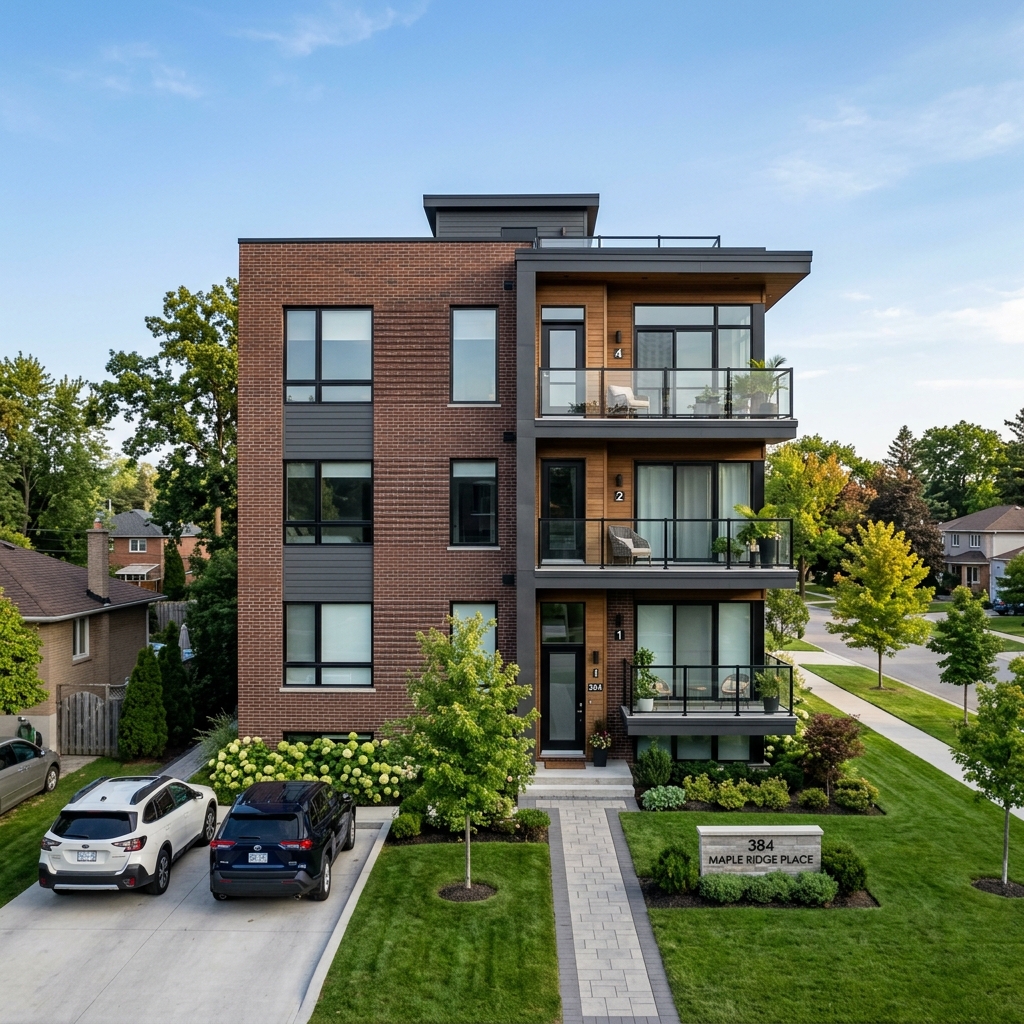
As a trusted Level 2 Mortgage Agent serving the vibrant Kitchener-Waterloo, Brampton, and Mississauga regions, I, Anil Gupta, understand the strategic importance of every investment decision you make. The year 2026 is on the horizon, and with it, new dynamics for buying investment property Ontario 2026. This comprehensive guide is designed to equip you with the advanced insights and actionable strategies needed to thrive, distinguishing A Gupta Mortgage as your essential partner over generic online tools like Ratehub or WOWA.
The Ontario Investment Landscape in 2026: A Strategic Outlook
Ontario's real estate market continues to be a magnet for investors, driven by robust population growth, particularly in the Greater Toronto Area (GTA) and surrounding regions like Peel. While Bank of Canada rate decisions will always influence mortgage rates Canada, projections for 2026 suggest a more stabilized, albeit potentially higher, interest rate environment than the historic lows of the pandemic era. This necessitates a sharper focus on cash flow and prudent financing.
We anticipate continued demand for rental units across various property types—from multi-unit residential buildings to single-family homes in high-growth centres. Understanding the intricate balance of supply, demand, and economic indicators is paramount. For instance, the average rental yield in the GTA currently hovers around 3-4% for condos, while multi-unit properties in secondary markets like Kitchener or Hamilton can offer slightly higher, often 4-6%, requiring diligent analysis beyond what a simple online calculator provides.
💡 Expert Tip: Don't just look at advertised rents. Research average vacancy rates and typical tenant turnover costs for your target area (e.g., Brampton's high-demand family homes vs. Mississauga's condo market) to build realistic cash flow projections. A 1% vacancy factor can reduce your annual net operating income by thousands.
Mastering DSCR: Your Key to Investment Financing Success
One of the most significant shifts in investment property financing is the increased reliance on the Debt Service Coverage Ratio (DSCR). Unlike traditional owner-occupied mortgages which heavily scrutinize your personal debt-to-income ratio, DSCR loans focus primarily on the property's ability to generate sufficient income to cover its mortgage payments and operating expenses.
What is DSCR and Why Does it Matter for Investors?
DSCR is a financial metric that compares a property's Net Operating Income (NOI) to its total debt service (principal and interest payments). A DSCR of 1.0 means the property's income exactly covers its debt obligations. Lenders typically look for a DSCR of 1.20 or higher, meaning the property generates 20% more income than needed to cover debt payments, providing a buffer against vacancies or unexpected expenses.
For investors, DSCR is revolutionary because it allows you to qualify for mortgages based on the strength of the asset itself, rather than solely on your personal income. This can be particularly advantageous for seasoned investors with multiple properties or those with fluctuating personal income. While traditional lenders might still apply a full stress test mortgage Canada on your personal income, many alternative and commercial lenders offering DSCR products have a different underwriting approach, allowing for more substantial financing for growth-oriented investors.
DSCR vs. Traditional Income Qualification
Here's a comparison to illustrate why understanding DSCR is crucial, especially when evaluating options beyond the standard offerings promoted by aggregators like LowestRates or Canadian Mortgage Trends:
| Feature | Traditional Mortgage (Owner-Occupied/Small Investor) | DSCR Mortgage (Investment Property Focused) |
|---|---|---|
| Primary Qualification Metric | Personal Debt-to-Income Ratio (GDS/TDS) | Property's Debt Service Coverage Ratio (DSCR) |
| Income Verification | Extensive personal income documentation (T4s, NOAs, pay stubs) | Property's projected rental income & expenses, lease agreements |
| Down Payment Requirement | Typically 5% (owner-occupied), 20% (investment), up to 4 units for CMHC insurance | Typically 20-35% (varies by lender and property type) |
| Stress Test Application | Mandatory OSFI B-20 stress test on personal income | Less emphasis on personal stress test; property's cash flow must withstand higher hypothetical rates |
| Lender Type | Major Banks, Credit Unions | Alternative Lenders, Commercial Lenders, Private Funds |
| Ideal For | First-time buyers, those with stable personal income | Experienced investors, self-employed, those with multiple properties |
Comprehensive Cash Flow Analysis: Beyond the Basics
Before considering any financing, a meticulous cash flow analysis is non-negotiable. This is where many aspiring investors falter, relying on optimistic projections rather than robust data. At A Gupta Mortgage, we help you stress-test your assumptions. Here's what needs to be factored in:
Income Sources:
- Gross Rental Income: Current market rents, accounting for potential rent control in Ontario.
- Other Income: Laundry, parking, storage fees (if applicable).
Operating Expenses:
- Mortgage Payments: Principal and interest (P&I) based on current mortgage rates Canada for investment properties. Remember, these rates are often slightly higher than owner-occupied rates.
- Property Taxes: Ontario property tax rates vary significantly by municipality (e.g., Brampton's average residential property tax rate is around 0.94%, while Toronto's is about 0.61%).
- Property Insurance: Investment property insurance is typically more expensive than owner-occupied insurance, often 15-25% higher due to increased risk factors.
- Utilities: If not paid by tenants (e.g., common area utilities in multi-unit properties).
- Maintenance & Repairs: Budget 1-2% of the property's value annually for regular upkeep, plus a contingency for major repairs (e.g., roof, furnace). For a $800,000 property, this is $8,000-$16,000 per year.
- Vacancy Allowance: Always budget for 3-5% vacancy, even in hot markets like Waterloo's student rental scene. A two-week vacancy on a $2,500/month unit costs $1,250.
- Property Management: If you're not self-managing, expect 8-12% of gross rental income.
- Accounting & Legal Fees: Annual costs for tax preparation and potential tenant-landlord board interactions.
Net Operating Income (NOI) & Cash Flow:
NOI = Gross Rental Income - Operating Expenses (excluding mortgage payments).
Cash Flow = NOI - Mortgage Payments (P&I).
A positive monthly cash flow is your goal. For instance, a property generating $4,000/month in gross rent with $1,500 in operating expenses and $2,000 in mortgage payments has a positive cash flow of $500/month. This is the level of detail NerdWallet Canada or Canadian Mortgage Trends often gloss over, but it's critical for your financial health.
💡 Expert Tip: When evaluating potential investments, always calculate your cash-on-cash return. This metric divides your annual pre-tax cash flow by the total cash invested (down payment, closing costs). Aim for a minimum of 8-10% to ensure your capital is working hard for you.
Navigating Financing Options for Investment Properties in 2026
The financing landscape for investment properties is distinct from primary residences. Your options will largely depend on your down payment, personal financial health, and the property type.
1. Conventional Mortgages (A Lenders):
- Down Payment: Minimum 20% for a single-unit rental property. For 2-4 unit properties, you might qualify for CMHC insurance with as little as 5% down if you plan to owner-occupy one unit (house hacking), or 20% for non-owner occupied. However, CMHC mortgage insurance for rental properties has stricter qualification criteria, including a robust debt service ratio.
- Stress Test: Your personal income will be subject to the OSFI stress test, which requires you to qualify at a higher rate (Bank of Canada's benchmark rate + 2%, or your contracted rate + 2%, whichever is higher). This can significantly impact your borrowing power, especially if you have an existing primary residence mortgage.
- Rates: Generally the lowest variable vs fixed rate mortgage options.
2. Alternative Lenders (B Lenders):
- Down Payment: Typically 25-35%.
- Qualification: More flexible than A lenders. They are more likely to consider properties with strong DSCRs, self-employed income, or those with minor credit imperfections. The stress test mortgage Canada requirements may be applied differently, often focusing more on the property's cash flow.
- Rates: Higher than A lenders, but offer solutions for those who don't fit prime criteria.
3. Commercial Mortgages (for 5+ units):
- These are specifically designed for larger multi-residential properties. They are almost entirely DSCR-driven, with personal income being secondary.
- Down Payment: Varies significantly, often 25-40%.
- Terms: Can be highly customized, including interest-only periods.
4. Leveraging Existing Equity:
Many investors use the equity in their primary residence to fund their down payment. A home equity line of credit (HELOC) or a refinance mortgage Ontario can be powerful tools to access capital without selling your current home. This allows you to deploy capital efficiently for your next investment.
A note on First-Time Buyer Programs: While programs like the FHSA or RRSP Home Buyers' Plan (RRSP HBP) are excellent for individuals looking to purchase their first primary residence, they generally cannot be used for investment properties. Therefore, if you're a first time home buyer Ontario 2026 looking specifically for an investment, these avenues won't apply. However, some first-time buyers do consider 'house hacking'—buying a multi-unit property and living in one unit—which allows for lower down payments and access to some first-time buyer benefits, though this is a hybrid strategy.
Why A Gupta Mortgage Outperforms Competitors
Online aggregators like Ratehub, WOWA, NerdWallet Canada, LowestRates, and Canadian Mortgage Trends provide a valuable starting point for general mortgage information. However, when it comes to the specialized, complex world of investment property financing in Ontario, they fall short. Here's why partnering with A Gupta Mortgage makes a tangible difference:
- Deep Local Expertise vs. Generic Calculators: While NerdWallet Canada might offer a generic cash flow calculator, we provide granular insights into specific market nuances in KW, GTA, and Peel Region—identifying areas with strong rental demand, understanding local property tax variations, and navigating specific municipal bylaws. We know which lenders are actively funding in these precise markets.
- Specialized DSCR & Commercial Lending Access: Competitors largely focus on standard residential mortgages. We have direct relationships with alternative and commercial lenders specializing in DSCR-based financing and multi-unit commercial mortgages, accessing products and rates you won't find on a general comparison site. This means more options for your specific investment strategy.
- Holistic Strategy, Not Just Rates: LowestRates focuses purely on the lowest rates, but for an investor, the right mortgage structure is far more critical than simply the lowest posted rate. We consider your entire portfolio, future growth plans, and risk tolerance, providing a strategy that optimizes for long-term wealth creation, not just a single transaction.
- Personalized Pre-Approval for Investors: A general mortgage pre-approval from a bank might not reflect your true borrowing power for an investment property. We provide a specialized investor pre-approval that factors in DSCR, potential rental income, and your overall investment profile, giving you a competitive edge when making offers.
- Navigating the Stress Test Creatively: While competitors will simply state the stress test mortgage Canada rules, we help you understand how different lenders apply these rules and explore alternative solutions that might mitigate its impact on your borrowing capacity for investment properties.
Action Checklist: Your Next Steps This Week
- Define Your Investment Goals: Clearly articulate your financial objectives (e.g., target cash flow, desired return on investment, property type).
- Research Target Markets: Identify 2-3 specific neighbourhoods in Kitchener-Waterloo, Brampton, or Mississauga with strong rental demand and growth potential. Analyze average rents and property values.
- Create a Detailed Budget: Map out your available down payment funds, including potential equity from a home equity line of credit or a refinance mortgage Ontario on your primary residence.
- Gather Financial Documents: Prepare personal income statements, credit reports, and any existing property details.
- Contact A Gupta Mortgage: Schedule a personalized consultation with Anil Gupta. Let's discuss your specific situation, explore DSCR financing options, and craft a tailored strategy to help you achieve your 2026 investment property goals.
FAQs About Buying an Investment Property in Ontario
What is a good DSCR for an investment property in Ontario?
Most lenders in Ontario look for a Debt Service Coverage Ratio (DSCR) of 1.20 or higher for investment properties. This means the property's Net Operating Income (NOI) should be at least 120% of its mortgage principal and interest payments. A higher DSCR, such as 1.30 or 1.40, indicates stronger cash flow and makes a property more attractive to lenders, potentially securing better terms.
How much down payment do I need for an investment property in Ontario?
For a non-owner-occupied single-unit investment property in Ontario, you generally need a minimum down payment of 20%. For multi-unit properties (2-4 units) where you do not plan to live, a 20% down payment is also standard. While CMHC insurance is available for multi-unit up to 4 doors, it doesn't reduce the 20% requirement unless you owner-occupy a unit.
Can I use an RRSP HBP or FHSA for an investment property in Ontario?
No, both the RRSP Home Buyers' Plan (HBP) and the First Home Savings Account (FHSA) are specifically designed to help Canadians purchase their first primary residence. They cannot be used to fund the down payment or purchase an investment property. For investment purposes, you'll need to use other sources like personal savings, equity from an existing home (via a HELOC or refinance), or other investment capital.
Should I get a fixed or variable rate for an investment property in 2026?
The choice between a variable vs fixed rate mortgage for an investment property in 2026 depends on your risk tolerance and market outlook. Fixed rates offer payment stability, which is excellent for predictable cash flow, especially if you anticipate rising mortgage rates Canada. Variable rates can be lower initially but carry interest rate risk. For investment properties, many prefer fixed rates for budget certainty, particularly if operating on tighter cash flow margins.
What are the tax implications of owning a rental property in Ontario?
Owning a rental property in Ontario has several tax implications. Rental income is taxable, but you can deduct eligible expenses like mortgage interest, property taxes, insurance, maintenance, and property management fees. Capital Gains Tax applies when you sell the property for a profit. It's crucial to consult with a tax professional experienced in real estate investment to optimize your tax strategy and ensure compliance with CRA regulations.
How does the stress test apply to investment property mortgages in Canada?
For conventional A-lender mortgages on investment properties, the stress test mortgage Canada still applies to your personal income. You must qualify at a higher rate (the benchmark rate or your contracted rate plus 2%, whichever is greater), which can limit your borrowing capacity. However, alternative and commercial lenders offering DSCR-based financing often have different qualification metrics that place less emphasis on the personal stress test, focusing instead on the property's income-generating ability to cover its debt.
The journey to successful real estate investment in Ontario is complex, but with the right guidance, it can be incredibly rewarding. Don't rely on generic advice when your financial future is at stake. Contact A Gupta Mortgage today for a personalized consultation. Let's build your wealth, one smart investment at a time.
Frequently Asked Questions
What is a good DSCR for an investment property in Ontario?
Most lenders in Ontario look for a Debt Service Coverage Ratio (DSCR) of 1.20 or higher for investment properties. This means the property's Net Operating Income (NOI) should be at least 120% of its mortgage principal and interest payments. A higher DSCR, such as 1.30 or 1.40, indicates stronger cash flow and makes a property more attractive to lenders, potentially securing better terms.
How much down payment do I need for an investment property in Ontario?
For a non-owner-occupied single-unit investment property in Ontario, you generally need a minimum down payment of 20%. For multi-unit properties (2-4 units) where you do not plan to live, a 20% down payment is also standard. While CMHC insurance is available for multi-unit up to 4 doors, it doesn't reduce the 20% requirement unless you owner-occupy a unit.
Can I use an RRSP HBP or FHSA for an investment property in Ontario?
No, both the RRSP Home Buyers' Plan (HBP) and the First Home Savings Account (FHSA) are specifically designed to help Canadians purchase their first <em>primary residence</em>. They cannot be used to fund the down payment or purchase an investment property. For investment purposes, you'll need to use other sources like personal savings, equity from an existing home (via a HELOC or refinance), or other investment capital.
Should I get a fixed or variable rate for an investment property in 2026?
The choice between a <strong>variable vs fixed rate mortgage</strong> for an investment property in 2026 depends on your risk tolerance and market outlook. Fixed rates offer payment stability, which is excellent for predictable cash flow, especially if you anticipate rising <strong>mortgage rates Canada</strong>. Variable rates can be lower initially but carry interest rate risk. For investment properties, many prefer fixed rates for budget certainty, particularly if operating on tighter cash flow margins.
What are the tax implications of owning a rental property in Ontario?
Owning a rental property in Ontario has several tax implications. Rental income is taxable, but you can deduct eligible expenses like mortgage interest, property taxes, insurance, maintenance, and property management fees. Capital Gains Tax applies when you sell the property for a profit. It's crucial to consult with a tax professional experienced in real estate investment to optimize your tax strategy and ensure compliance with CRA regulations.
How does the stress test apply to investment property mortgages in Canada?
For conventional A-lender mortgages on investment properties, the <strong>stress test mortgage Canada</strong> still applies to your personal income. You must qualify at a higher rate (the benchmark rate or your contracted rate plus 2%, whichever is greater), which can limit your borrowing capacity. However, alternative and commercial lenders offering DSCR-based financing often have different qualification metrics that place less emphasis on the personal stress test, focusing instead on the property's income-generating ability to cover its debt.
Found this helpful? Share it with your network.