 A Gupta Mortgage
First-Time Buyer Land Transfer Tax on a $700K Toronto Condo in 2026
First-time buyer in Toronto? Discover your exact land transfer tax on a $700,000 condo in 2026. Learn about rebates & save up to $8,475. Contact A Gupta Mortgage for expert advice.
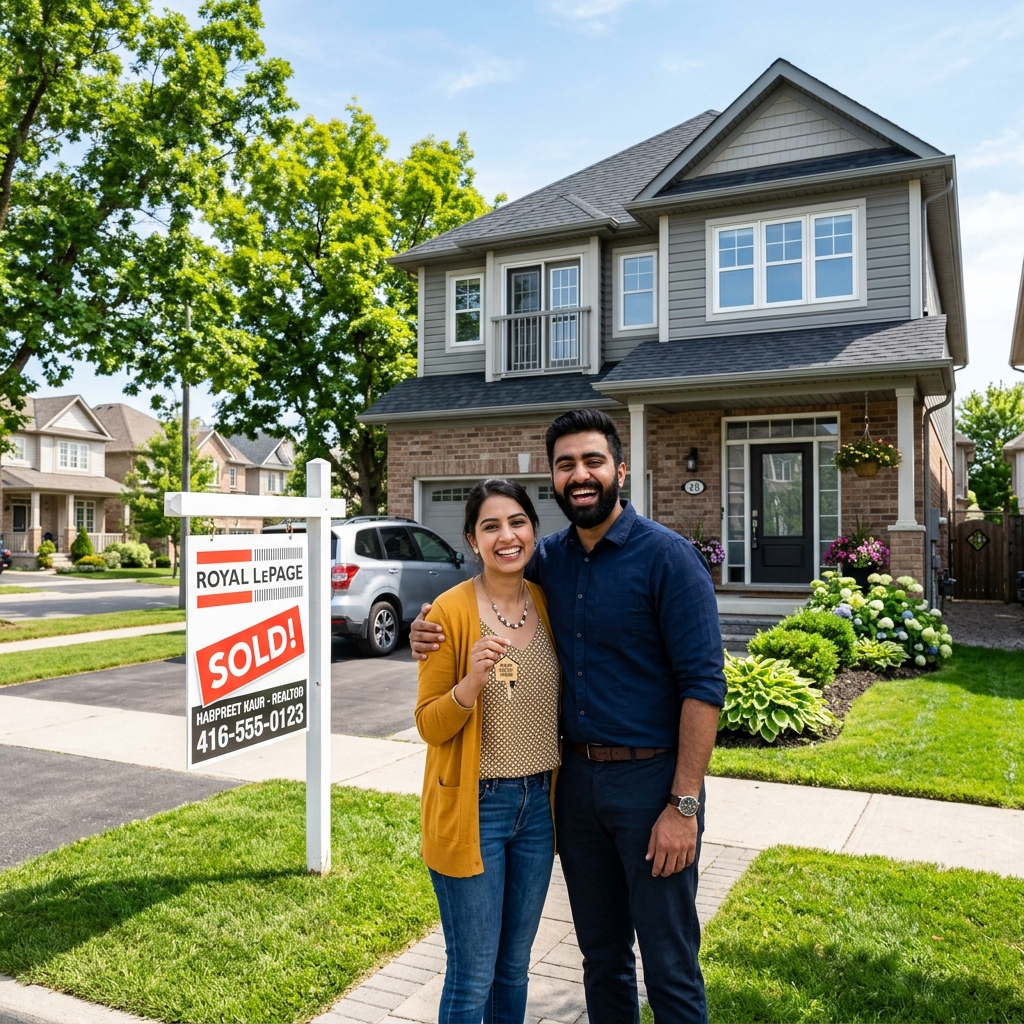
TL;DR: As a first-time buyer purchasing a $700,000 condo in Toronto in 2026, you can expect to pay approximately $12,475 in net land transfer tax after leveraging available provincial and municipal rebates. While the gross tax would be $20,950, first-time buyer programmes can reduce this significant closing cost by up to $8,475.
Navigating the complexities of homeownership costs in Ontario, especially in a dynamic market like Toronto, can feel daunting. For first-time buyers, understanding every line item on your closing statement is paramount to a successful and stress-free purchase. One of the most significant, and often underestimated, upfront costs is the Land Transfer Tax (LTT).
At A Gupta Mortgage, a trusted Level 2 Mortgage Agent serving Kitchener-Waterloo, Brampton, and Mississauga, we believe in empowering you with precise, actionable financial knowledge. Unlike generic online calculators from platforms like Ratehub or WOWA that offer broad estimates, we delve into the specific nuances of your situation. Today, we're dissecting exactly how much land transfer tax a first-time buyer will pay on a $700,000 Toronto condo in 2026, and how to maximize your savings.
Understanding Land Transfer Tax in Ontario & Toronto: A Dual System
When you purchase a property in Ontario, you're subject to provincial Land Transfer Tax (LTT). However, if that property is located within the City of Toronto, you're also subject to an additional municipal Land Transfer Tax (MLTT). This dual taxation significantly increases closing costs for Toronto purchasers compared to other parts of the GTA or Peel Region.
Both provincial and municipal LTT are calculated on a progressive scale, meaning higher property values incur higher tax rates on portions of the purchase price. While the specific rates are subject to legislative changes, our analysis for 2026 assumes the current, well-established structures will remain in place, as significant changes are typically well-telegraphed by the province and municipality.
💡 Expert Tip: Many online calculators from competitors like NerdWallet Canada and LowestRates often combine provincial and municipal LTT into a single estimate without clearly delineating the two. This can obscure the potential for specific rebates. Always verify the breakdown to ensure you're not missing out on available savings.
Calculating Gross Land Transfer Tax on a $700,000 Toronto Condo in 2026
Let's break down the gross LTT payable on a $700,000 Toronto condo before applying any first-time buyer rebates. We'll use the current, established rates for both the Provincial and Toronto Municipal Land Transfer Taxes.
1. Ontario Provincial Land Transfer Tax (LTT) Calculation
The provincial LTT rates are as follows:
- 0.5% on the first $55,000
- 1.0% on the portion from $55,000.01 to $250,000
- 1.5% on the portion from $250,000.01 to $400,000
- 2.0% on the portion from $400,000.01 to $2,000,000
- 2.5% on the portion over $2,000,000
For a $700,000 condo:
- $55,000 x 0.005 = $275
- ($250,000 - $55,000) x 0.01 = $195,000 x 0.01 = $1,950
- ($400,000 - $250,000) x 0.015 = $150,000 x 0.015 = $2,250
- ($700,000 - $400,000) x 0.02 = $300,000 x 0.02 = $6,000
Total Provincial LTT = $275 + $1,950 + $2,250 + $6,000 = $10,475
2. Toronto Municipal Land Transfer Tax (MLTT) Calculation
The City of Toronto's MLTT rates mirror the provincial rates:
- 0.5% on the first $55,000
- 1.0% on the portion from $55,000.01 to $250,000
- 1.5% on the portion from $250,000.01 to $400,000
- 2.0% on the portion from $400,000.01 to $2,000,000
- 2.5% on the portion over $2,000,000
For a $700,000 condo, the calculation is identical to the provincial LTT:
Total Toronto MLTT = $10,475
Total Gross Land Transfer Tax for a $700,000 Toronto Condo
Before any rebates, the combined land transfer tax would be:
Gross LTT = Provincial LTT ($10,475) + Toronto MLTT ($10,475) = $20,950
First-Time Buyer Rebates: Your Path to Significant Savings
Fortunately, both the Province of Ontario and the City of Toronto offer significant rebates for eligible first-time home buyers. These programmes are designed to ease the financial burden of entering the competitive housing market.
1. Ontario Land Transfer Tax Rebate for First-Time Buyers
The provincial government offers a rebate of up to $4,000 on the LTT. To qualify, you must be at least 18 years old, be a Canadian citizen or permanent resident, and occupy the home as your principal residence within nine months of purchase. Crucially, neither you nor your spouse can have owned a home anywhere in the world previously.
Since your calculated provincial LTT of $10,475 exceeds the maximum rebate, you will receive the full $4,000 rebate.
Net Provincial LTT after rebate = $10,475 - $4,000 = $6,475
2. Toronto Municipal Land Transfer Tax Rebate for First-Time Buyers
The City of Toronto offers its own rebate, up to a maximum of $4,475. The eligibility criteria are largely similar to the provincial rebate, including being a Canadian citizen or permanent resident, at least 18 years old, and having never owned a home anywhere in the world. The property must also be used as your principal residence.
Given your calculated Toronto MLTT of $10,475, you will receive the full $4,475 rebate.
Net Toronto MLTT after rebate = $10,475 - $4,475 = $6,000
💡 Expert Tip: While some competitors like Ratehub and WOWA provide general information on rebates, they often don't emphasize the importance of timely application. Your lawyer will typically handle the rebate application on your behalf at the time of closing, but it's crucial to confirm your eligibility and ensure all necessary documentation is prepared well in advance to avoid delays. Missing documentation could mean paying the full tax upfront and then waiting for a refund, which can strain your closing budget.
The Final Calculation: What You'll Actually Pay ($12,475)
Combining the net provincial and municipal land transfer taxes after applying the first-time buyer rebates:
Net Land Transfer Tax = Net Provincial LTT ($6,475) + Net Toronto MLTT ($6,000) = $12,475
Therefore, a first-time buyer purchasing a $700,000 Toronto condo in 2026 can expect to pay approximately $12,475 in total land transfer taxes. This represents a substantial saving of $8,475 from the gross amount of $20,950!
Beyond Land Transfer Tax: Other Essential Closing Costs for First-Time Buyers
While Land Transfer Tax is a major component, it's just one piece of the financial puzzle. For a comprehensive financial plan, it's vital to budget for all closing costs. Here's a comparison of typical closing costs for a $700,000 condo, illustrating where your funds will go beyond the down payment. This comprehensive view often goes beyond what you'd find on a basic 'first time home buyer Ontario 2026' search on generic sites.
| Closing Cost Item | Estimated Cost for $700,000 Condo | Notes for First-Time Buyers |
|---|---|---|
| Land Transfer Tax (Net) | $12,475 | As calculated above, after provincial & Toronto FTHB rebates. |
| Legal Fees & Disbursements | $2,000 - $3,000 | Includes lawyer's fee, title search, registration, etc. Varies by firm. |
| Title Insurance | $300 - $800 | Protects against title defects. Often required by lenders. |
| Appraisal Fee | $300 - $500 | Required by lender to confirm property value. Sometimes covered by lender. |
| Home Inspection | $500 - $700 | Crucial for identifying potential issues, though less common for new condos. |
| CMHC Insurance Premium (if <20% down) | Varies (e.g., $25,200 for 5% down) | Calculated as % of mortgage, can be added to mortgage. For a $700k condo with minimum 5% down ($35k), mortgage would be $665k. CMHC premium is 3.60% for LTV 90.01-95%, so $665,000 * 0.036 = $23,940. This is a significant cost often overlooked when considering 'mortgage rates Canada' alone. |
| Adjustments (Property Tax, Condo Fees) | Varies ($500 - $2,000) | Prorated amounts for prepaid property taxes or condo fees, reimbursed to seller. |
| HST on CMHC Premium | Varies (e.g., $3,100 for 5% down) | 13% HST on the CMHC premium. This must be paid upfront. |
| Utility Hook-up Fees | $100 - $500 | For electricity, water, internet, etc. |
| Estimated Total Closing Costs (excluding down payment & CMHC premium) | Approx. $16,000 - $20,000+ | This does not include your down payment, or the CMHC premium (which is typically rolled into the mortgage), but does include the HST on the CMHC premium that must be paid upfront. |
Understanding these figures upfront is critical. While sites like Canadian Mortgage Trends might discuss variable vs fixed rate mortgage strategies, they often don't provide this granular breakdown of *all* the cash you need on closing, which can easily exceed 1.5-4% of the purchase price, on top of your down payment.
Strategic Financial Planning for Your First Toronto Condo Purchase
Beyond simply calculating costs, a truly effective strategy for a first-time buyer involves leveraging every available resource and understanding your financial capacity.
1. Maximize Your Down Payment & Savings
Consider programmes like the First Home Savings Account (FHSA) and the RRSP Home Buyers' Plan (HBP). The FHSA, launched in 2023, is a game-changer, allowing eligible individuals to save up to $8,000 annually (max $40,000 lifetime) on a tax-free basis, with contributions being tax-deductible. This is superior to the RRSP HBP in many ways, as withdrawals for a first home are entirely tax-free and don't need to be repaid. Combining these can significantly boost your down payment, potentially reducing your need for CMHC insurance or lowering your monthly mortgage payments.
2. The Power of Mortgage Pre-Approval
Before you even start serious house hunting, getting a mortgage pre-approval is non-negotiable. This isn't just about knowing your 'mortgage rates Canada' – it's about understanding your true purchasing power, factoring in the stress test mortgage Canada requirements set by OSFI, and your personal debt-to-income ratio. A pre-approval from A Gupta Mortgage provides a realistic budget, including an allowance for closing costs like LTT, saving you time and emotional investment in properties you can't realistically afford.
💡 Expert Tip: Don't just rely on generic online pre-qualification tools. A comprehensive mortgage pre-approval from a Level 2 agent like Anil Gupta involves a deep dive into your finances, including your credit score, income stability, and debt obligations. This rigorous process ensures you understand your true affordability, including all associated closing costs and the impact of the stress test, which is often a blind spot for users of competitor platforms. This can save you thousands by preventing costly last-minute financing surprises.
Why A Gupta Mortgage Outperforms Competitors like Ratehub and WOWA
While platforms like Ratehub, WOWA, NerdWallet Canada, and LowestRates offer valuable tools for comparing 'mortgage rates Canada' or estimating 'first time home buyer Ontario 2026' costs, they often fall short in providing the personalized, in-depth guidance that a significant purchase like a Toronto condo demands. Here's how A Gupta Mortgage offers a superior experience:
- Personalized, Consultative Approach: We don't just give you a number. We sit down with you (virtually or in person across KW, Brampton, Mississauga) to understand your unique financial situation, future goals, and risk tolerance. This isn't just about finding the lowest rate; it's about building a sustainable homeownership strategy. Competitors often present a one-size-fits-all solution, missing the nuances of individual financial health or specific regional programmes.
- Deep Local Market Expertise: Understanding the intricacies of Toronto's dual Land Transfer Tax system, or specific regional programmes available in Peel Region versus Kitchener-Waterloo, requires local knowledge. Our advice is tailored to the Ontario market, providing insights that generic national platforms cannot.
- Level 2 Agent Advantage: As a Level 2 Mortgage Agent, Anil Gupta has access to a wider array of lenders and mortgage products, including those from private lenders, beyond what major banks or basic brokers offer. This expanded network allows us to find more flexible solutions for complex scenarios, ensuring you get the most competitive terms, whether you're concerned about your debt-to-income ratio or navigating the stress test mortgage Canada regulations.
- Holistic Financial Planning: We look beyond just the mortgage. We integrate your mortgage strategy with your overall financial picture, including leveraging FHSA/RRSP HBP for down payment assistance Ontario, understanding CMHC insurance implications, and planning for all closing costs, not just the LTT. We help you build a robust budget that accounts for everything, from legal fees to property adjustments.
- Direct, Actionable Advice: Instead of directing you to a calculator, we provide direct, actionable steps and connect you with trusted partners (lawyers, home inspectors) to streamline your home-buying journey. Our goal is to make your path to homeownership as clear and efficient as possible, providing clarity where competitor sites often leave you with more questions.
Frequently Asked Questions (FAQ) About First-Time Buyer Land Transfer Tax in Toronto
What is the total land transfer tax I will pay on a $700,000 Toronto condo as a first-time buyer in 2026?
As a first-time buyer, you will pay approximately $12,475 in net land transfer tax on a $700,000 Toronto condo in 2026. This figure is after applying the maximum provincial rebate of $4,000 and the maximum Toronto municipal rebate of $4,475 from the gross tax of $20,950.
How do I qualify for the first-time buyer land transfer tax rebates in Ontario and Toronto?
To qualify, you must be at least 18 years old, be a Canadian citizen or permanent resident, and occupy the home as your principal residence within nine months of purchase. Neither you nor your spouse can have previously owned a home anywhere in the world. For the Toronto rebate, similar criteria apply specifically to properties within the City of Toronto.
Why is the land transfer tax higher in Toronto compared to other Ontario cities?
Toronto has a unique dual land transfer tax system, meaning buyers pay both the provincial Land Transfer Tax (LTT) and an additional municipal Land Transfer Tax (MLTT) to the City of Toronto. This effectively doubles the gross land transfer tax burden compared to other Ontario regions like Kitchener-Waterloo or Brampton.
Can the Land Transfer Tax rates change before 2026?
Yes, while the current rates have been stable for some time, both the provincial and municipal governments retain the right to adjust land transfer tax rates or rebate amounts through legislative changes. However, significant changes are typically announced in advance during budget cycles, providing some foresight for buyers.
Should I budget for land transfer tax separately from my down payment?
Absolutely. Land transfer tax, along with other closing costs like legal fees and CMHC insurance HST, must be paid upfront on your closing date. These are separate from your down payment and typically cannot be financed into your mortgage, making it crucial to have these funds readily available.
Are there other ways to reduce my overall closing costs as a first-time buyer?
Beyond LTT rebates, consider leveraging your FHSA and RRSP Home Buyers' Plan for your down payment to potentially reduce CMHC insurance premiums by reaching the 20% down payment threshold. Also, work with a skilled mortgage agent to secure the best mortgage rates Canada offers, which can indirectly save you money on interest over the mortgage term, freeing up cash for other costs.
Action Checklist: Your Next Steps to Smart Homeownership
- Calculate Your Full Budget: Use the figures above to create a realistic budget that includes your down payment, estimated land transfer tax ($12,475 for a $700k condo), CMHC insurance (if applicable), legal fees, and other adjustments.
- Explore Down Payment Assistance: If you haven't already, open an FHSA and contribute the maximum allowable for 2024 and 2025. Also, evaluate your eligibility for the RRSP Home Buyers' Plan to further boost your down payment.
- Get a Comprehensive Mortgage Pre-Approval: Contact Anil Gupta at A Gupta Mortgage this week. We’ll provide a thorough pre-approval, factoring in the stress test mortgage Canada requirements and your personal debt-to-income ratio, giving you a clear picture of your borrowing capacity.
- Consult a Real Estate Lawyer: Speak with a trusted real estate lawyer early in your process to understand all legal aspects of property transfer and to confirm your eligibility for all land transfer tax rebates.
- Stay Informed: Keep an eye on provincial and municipal budget announcements for any potential changes to LTT rates or rebate programmes that might impact your 2026 purchase.
Purchasing your first home in Toronto is an exciting milestone, but it requires meticulous planning and expert guidance. Don't let hidden costs or complex calculations derail your dream. At A Gupta Mortgage, we are committed to providing first-time buyers in Kitchener-Waterloo, Brampton, Mississauga, and the wider GTA with the clarity and support needed for a confident purchase.
Ready to navigate the Toronto market with confidence? Contact A Gupta Mortgage today for a personalized, no-obligation consultation. Let us help you secure your future, one smart mortgage decision at a time.
Frequently Asked Questions
What is the total land transfer tax I will pay on a $700,000 Toronto condo as a first-time buyer in 2026?
As a first-time buyer, you will pay approximately $12,475 in net land transfer tax on a $700,000 Toronto condo in 2026. This figure is after applying the maximum provincial rebate of $4,000 and the maximum Toronto municipal rebate of $4,475 from the gross tax of $20,950.
How do I qualify for the first-time buyer land transfer tax rebates in Ontario and Toronto?
To qualify, you must be at least 18 years old, be a Canadian citizen or permanent resident, and occupy the home as your principal residence within nine months of purchase. Neither you nor your spouse can have previously owned a home anywhere in the world. For the Toronto rebate, similar criteria apply specifically to properties within the City of Toronto.
Why is the land transfer tax higher in Toronto compared to other Ontario cities?
Toronto has a unique dual land transfer tax system, meaning buyers pay both the provincial Land Transfer Tax (LTT) and an additional municipal Land Transfer Tax (MLTT) to the City of Toronto. This effectively doubles the gross land transfer tax burden compared to other Ontario regions like Kitchener-Waterloo or Brampton.
Can the Land Transfer Tax rates change before 2026?
Yes, while the current rates have been stable for some time, both the provincial and municipal governments retain the right to adjust land transfer tax rates or rebate amounts through legislative changes. However, significant changes are typically announced in advance during budget cycles, providing some foresight for buyers.
Should I budget for land transfer tax separately from my down payment?
Absolutely. Land transfer tax, along with other closing costs like legal fees and CMHC insurance HST, must be paid upfront on your closing date. These are separate from your down payment and typically cannot be financed into your mortgage, making it crucial to have these funds readily available.
Are there other ways to reduce my overall closing costs as a first-time buyer?
Beyond LTT rebates, consider leveraging your FHSA and RRSP Home Buyers' Plan for your down payment to potentially reduce CMHC insurance premiums by reaching the 20% down payment threshold. Also, work with a skilled mortgage agent to secure the best mortgage rates Canada offers, which can indirectly save you money on interest over the mortgage term, freeing up cash for other costs.
Found this helpful? Share it with your network.